Back in April, Tim Dolby posted a message on Birding-aus asking for interest in filling spots in his car for a trip to the Iron Range. Being such a good oppurtunity the spots filled fast but there was enough people to get together a second vehicle. So Laurie Living, John McRae, Mark Stanley and I had a couple of meetings at the Irish Times in Melbourne where some serious planning (and drinking??) was done. Thanks must go to Tim Dolby for putting the group in touch and for his very practical advice during this period. Car, flights and accomodation was booked and then it was a countdown of days. Unfortunately Mark had a family emergency and was unable to attend at the last minute but his place was taken by his mate Jim Preston. Mark was good enough to give us his printed notes, checklists and maps which were very useful throughout the trip
As far as birding preparation went I bought Jo Wieneke's "Where to find birds in North-East Queensland" for my time around Cairns and I printed and read every trip report I could get my hands on. Jo's guide was quite useful and I visited many of the sites listed around Cairns and the Tablelands. Unfortunately I did not take the time to learn the calls which I ended up regretting. I definitely recommend acquiring the necessary CD's and learning the calls, particularly the Iron Range specials!
I was dropped at Melbourne Airport about 2 hours before my flight was due to depart, unfortunately due to the duststorms in Sydney the day before all flights were delayed - mine 3 hours!! After 5 hours in the delightful confines of the Virgin terminal I was certainly ready to be in the air. Finally underway and I was then to enjoy the experience of a tantrum throwing 3 year old #@!$ kicking the back of my seat the whole way, I can usually do a pretty decent glare but this child was immune as was its mother. I hope the plasma TV she bought with her baby bonus was worth it. In Cairns the first bird I saw was a Pied Imperial Pigeon flying over which was a lovely first tick. I picked up my hire car for the next couple of days - the redoubtable Hyundai Getz whose white paintwork had taken on a beige colour due to all the dust and smoke in the air.
First stop was the mangrove boardwalk on the Airport Road. Unfortunately it was about 3:30 in the afternoon and stinking hot so I did not see or hear a single bird on the whole loop. Off to the Esplanade next where I bumped into a number of birders including Laurie. Some of them had seen the Laughing Gull earlier but were not sure where it was now. I walked a further 20 meters along the Esplanade and there it was in the first group of gulls I examined doing its best to be quite photogenic. Seeing good numbers of not so common waders down south like Grey-tailed Tattler, Terek Sandpiper and the Lesser and Greater Sand-plovers was a real pleasure. I spent a bit of time along the Esplanade seeing a pile of new birds and with light fading left to catchup and stay with my Uncle.

After the last thing close to a lie in I would get for the next 2 weeks I picked Laurie up from the Esplanade for a bit of a jaunt up to the tablelands. We watched a pair of Beach Stone-curlews for a bit of time before setting off, they were catching crabs out on the mudflats and running back nice and close to the shoreline to eat them. Heading south from Cairns we headed up the Gillies Highway towards the Tablelands. The area was thick with smoke and it soon became apparent why with the first of many burns occurring on the eastern slopes. Driving through smoke and smouldering logs was something we would certainly get used to over the next week or so.
First stop was Lake Barrine where quite a few birds were calling despite being 10am. We walked the small circuit track from near the entrance to the park, down to the lake and to the 2 giant Kauri pines. Tooth-billed Bowerbirds were calling their little hearts out and we got good views of a couple. Other good birds included my first Grey-headed Robin, a beautiful Spectacled Monarch and Spotted Catbirds. Plenty of Musky Rat Kangaroos in the leaf litter provided another point of interest. The 2 magnificent Kauri Pines are well worth a look. Lunch at the cafe was pretty good with Scarlet and Dusky Honeyeaters feeding in the bottlebrush right next to the balcony.
From Barrine we went to Lake Eacham where Bridled and Macleays Honeyeaters were feeding in the parking lot. Overhead was my first good look at Australian swiftlets. Would have liked some more time here but we had a few more places to visit. Next was the Curtain Tree Fig but there was nothing much happening there. In a field near Atherton were 1000's of Plumed Whistling-ducks and 100's of Magpie Geese. Not far past here Laurie yelled for me to stop... pulled over and there in a field were over 60 Sarus Crane - what a great sight. They were calling and doing little parts of dances.
We continued on to Hastie's Swamp where there were amazing numbers of Whistling-ducks and Magpie Geese. Darting in and out of the ducks were scavenging Buff-banded Rails and a flyby of a White-belled Sea-eagle caused all sorts of consternation. The highlight of the trip back to Cairns was a magnificent Spotted Harrier which sat on a fence post by the road giving us fantastic views.

Got up and went and picked up the guys and went to the airport to get the 4wd. There was a bit of a dispute about the car and apparently we weren't allowed to take it north of Cooktown but soon enough we were back in town getting supplies. Headed up through Kuranda and Mareeba and stopped at the Mareeba wetlands for lunch. At the house on the entrance road we found Great Bowerbird and bower, Pacific Baza and I saw a Banded Honeyeater. The wetland centreitself does a nice meat pie although there was not too much on the wetlands in the middle of the day with Green Pygmy Goose and Jacana being the highlight. Outside a daddy Emu and chicks modelled for the camera. Next we stopped at Lake Mitchell before heading to the Mt Molloy pub to watch the AFL grand final. During the game breaks we checked the town for Squatter Pigeon and ended up seeing a number of Red-winged Parrots feeding in someones front yard. After the Saints threw it away we stopped at the campground at the edge of town for Emerald Dove and a Scaly-breasted Lorikeet or two for Jim. A quick stop in at Abbatoir Swamp and then on to Kingfisher Park for the night.
At KP we went to see the owls at the oval. There is some dispute as to whether they are Masked or Barn Owls.... to me they looked and sounded Barn but I will happily hear more thoughts on the subject. During the night Sooty Owls called a number of times. That night we met Tim Dolby's group, Greg, Paul and Ruth who we would have a lot to do with over the next week.

Up early to explore the grounds of Kingfisher Park. Great place with a lot of the Wet Tropics specialities seen easily in the grounds. So many highlights - Papuan Frogmouths in the orchard, first attempts at seperating Yellow-spotted-graceful-lewins Honeyeaters, Barred Cuckoo-shrikes and Double-eyed Fig-parrots in a fruiting tree, Spotted Crakes errr.... Catbirds at the crake pond and endearing Grey-headed and Pale Yellow Robins.
After breakfast we went up Mt Lewis where we found Bower's Shrike-thrush, Fernwren, Victoria's Riflebird and Chowchilla. After quite a bit of following down the small plain scrubwrens near the clearing we decided we had Atherton Scrubwrens. The highlight for me on the way back down for me was certainly a Lumholtz Tree Kangaroo on the road. We later found out from Keith and Lindsey at KP that this is a really rare daytime sight on Mt Lewis.
We headed north, diverting down the Maryfarms side roads where we saw a number of Bustard, some right beside the car. The Palmer River Road House is well worth a lunch stop with Pied Butcherbird, Great Bowerbird and Apostlebirds hanging around the outside eating area. Out of Lakelands there was a surprising amount of bitumen going a large part of the way to Laura. Whilst driving close to 100 kph I saw some dark shapes beside the road, Squatter Pigeon!!! A quick u-turn and there in the shade were 3 Squatter Pigeon who really did not want move in the heat.
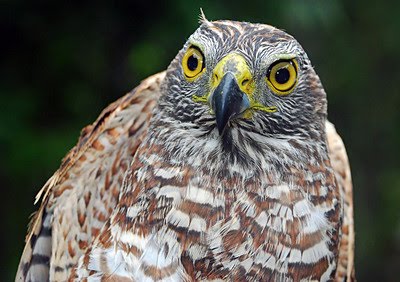
Past Laura we started seeing our first Black-backed Butcherbirds. At a wetland on the left we stopped for three Sarus Crane which gave us a good show before flying off. We stopped in at Artemis Station to say hello to Sue Shephard and to ask her permission to look for GSP. We went to Windmill Creek where we staked out a couple of dams, Red-tailed Black-Cockatoos, Galahs and Common Bronzewing were coming in to drink, we saw no sign of the GSP although perhaps I heard what sounded like Red-rumps but may have been my imagination. A Brown Goshawk thundering through ended up putting everything on edge. As it was starting to get dark we drove to Musgrave for the night... unfortunately the suicidal Agile Wallabies proved to be anything but agile..... Bumped into Tim's group at dinner where we decided to get up early and go look for the GSP together in the morning.

The day dawned on what was to prove probably the best day of my birding life. We drove towards the creek where we got out and walked towards the dam. It was lovely country with tall grass and termite mounds. As we neared the dam heard parrots and then there was brief views of a female Golden-shouldered Parrot.... frantic searching as it flew off but we needn't have worried as we soon found increasing numbers of parrots, perhaps 25 in total with several beautifully coloured males.... a stunning highlight. It was so good I could hardly look at my first White-throated Honeyeater flitting around overhead. Watched the parrots for perhaps 10 minutes before they flew off..... if we had been that much later we may have missed it. We walked back through what is terrific birding country... would certainly warrant more time. At the road we saw Masked Finch.... watching the finch while hearing t he GSP calling as they flew off to place unknown.
Just when we thought it couldnt get any better we were lucky enough to see a nesting Red Goshawk outside of Musgrave.... for the only time on the trip I had left my camera in the car.... but it was a price I happily paid to see such a fantastic bird. It was not yet 9 am and I had seen 2 of the rarer birds in Australia.... could it get any better than this?
Headed north to Coen where Tim's car got their tyre repaired. The whole way up I had been thinking I had been seeing and hearing Pied Currawong out of the corner of my eye and here in Coen it was a town bird :-) We had lunch at a dryish creek bed just out of town, here we had Helmeted Friarbird and Yellow Oriole. Pushed northwards to Archer River and then off the main road towards Iron Range.
Stopped a few times along the way, especially of interest was at a bushfire where Black Kites were wheeling around the edges textbook style. In Iron Range we stopped at the first real patch of tall rainforest for what turned out to be a fantastic hour of birding. Tawny-breasted Honeyeater, Trumpet Manucode, Magnificent Riflebird, Eclectus Parrot and Frilled Monarch as well as plenty of other rainforest species.
Eventually we had to move on and find our accomodation.... we drove past it and into Lockhart River which was perhaps a little scarey so late in the day. Was a good thing we missed the accomodation as we ended up seeing Palm Cockatoo flying across the road. Eventually we found the accomodation at the airport and had a good meal and an early night.

Rainforest Camp and Track - visited here a number of times at various times of the day. Often had a lot of very interesting birds - Tropical Scubwren, Tawny-breasted Honeyeater, Shining Flycatcher, Spectacled Monarch, Fairy Gerygone and on the last visit Green-backed Honeyeater. Fruit-doves were calling and Superb and Wompoo gave the odd look. Cuckoos and the YB Kingfisher called regularly but could not get onto them and our woeful attempts at whistling the cuckoos in probably left the local birds in hysterics. Probably the highlight of this site for me was great views of female Red-cheeked Parrots perched in a dead tree one morning. Tim Dolby's group had much more success at this site than we did, time of the day and conditions is probably important.
Cook's Hut - The Highlight of this site was undoubtably the Northern Scrub-Robin calling loudly near the toilet block and giving good views a number of times. A Noisy Pitta fossicked around near the toilet block also allowing some attempts at being photogenic. White-faced Robins were curious and would peer around tree trunks to see what was happening. The creek area down from the camp looked very promising but despite me visiting it many times it never really delivered anything special. Half looks at the manucode and riflebird were probably the best birds at the creek although Yellow and Olive-backed Orioles side by side was a good moment. The Marshalls race of the Double-eyed Fig-parrot showed well a number of times in the campsite. Undoubtedly the patriarch of the campsite was the Brush-turkey with his purple wattle prominant....
Gordons Creek Campsites and track - Probably my favourite of the three main rainforest sites in this area. The birding was often quiet then waves of birds would come through. Good area for monarchs with Spectacled, White-eared and Frilled as well as plenty of honeyeaters. Down in the creek itself was very good for Tropical Scubwren. Female Magnificent Riflebirds were seen quite regualrly, particularly on the small loop track which joins the two campsites. Once again the YB Kingfisher was heard here but did not show.
Would also recommend birding on the road between and around all these 3 areas (especially if there is no roadworks going on!)

Lockhart River - Portland Roads Rd - Im sure this has an official name but it escapes me at this time. Obviously travelled this a number of times as it is the main access between these two sites (unless you fancy a long swim) Fawn-breasted Bowerbirdwas seen flying over this road a number of times and was heard close to Portland Roads. Stopping in the grassy areas produced a number of smaller honeyeaters as well as Lovely and Red-backed Fairy-wrens and Golden-headed Cisticola. Probably also a reasonable area for White-streaked Honeyeater.Always a highlight was a Peregrine Falcon perched in a dead tree. Travelling back at night from Portland Roads we saw a number of Large-tailed Nightjars flushing from the road. Also beware of horses and other livestock on the road at night!!
Lockhardt River Township, Sewerage Treatment Works and Beach - Lockhardt River is not going to win any tidy town award anytime soon but the shop was convenient for food and fuel and while expensive not overly so. After searching in the ash and heat at Portland Roads for the Fawn-breasted Bowerbird for a couple of hours we were somewhat amused to find that the FBB is a townbird in Lockhardt River sitting on the powerlines near one of the depots. We visited the STW every day with Pied Heron, Glossy Ibis and Common Sandpiper prominant. Of particular interest were a number of snipe, one in particular having a flatter call than I am used to in Latham's and also showing a reluctance to flush high. Of the two snipe I saw fan tail feathers on landing, one was significantly duller than the other. There was a very nicely coloured wader which I took a heap of photos of until it dawned that it was just a Sharp-tailed Sandpiper in breeding colour.... we sure dont see them like that down south very often. Also of interest at the STW was a Green-backed Honeyeater and a screeching male Red-cheeked Parrot. A visit to the beach gave the first Ruddy Turnstone of the trip with Brahminy Kite a feature overhead.
Portland Roads - Our visits to Portland Roads were all doing the heat of the day so probably did it no justice birdwise. We searched for a couple of hours in the heat and ashes of an old dump for the FBB with no luck although did get good views of Rose-crowned Fruit-dove. In the bay at Portland Roads was Whimbrel and grey phase Eastern Reef Egret. The highlight here was undoubtedly culinary with the local cafe serving delicious seafood - I can highly recommend the prawns and the grilled reef fish was so good I inhaled it!!

Chilli Beach - Searched near the final T intersection for FBB as recommended in a number of trip reports but no luck. Similarly the small wetland behind the beach had nothing to report but that may be a matter of timing. The beach itself was quite postcardesque although windy. Offshore were a number of dark terns and noddy types but too far for a positive ID. Along the beach were a number of waders. Chilli Beach is certainly worth visting in the evening at the right time of year when the Metallic Starlings come in in their thousands and circle around the offshore islands in great clouds at dusk. Was a bit underwhelmed when the suggestion was given by the lady at the Portland Roads Cafe but it really was an amazing site and certainly recommended.
Airport - We stayed at the airport and did a drive around the perimeter one evening but nothing much to report. Seemed to have been burnt a little too recently to be much good for quail and the like.
The Red Coolabah Cask zone - this was a site marked by Tim's group with a cask where they saw White-streaked Honeyeaters, it is very close to the start of the Old Coen Track - we birded here a number of times at various times of the day but we never saw or heard the honeyeaters. There was quite a bit going on at various times at this site. Eclectus Parrots frequently flew over as did Palm Cockatoo on one occasion. We saw our only Black Butcherbirds in the Iron Range here. The highlight was an unexpected Black-winged Monarch which showed on the final full day in Iron Range. We did walk the start of the Old Coen Track but it was the middle of the day and hot. There were good views of Eccies in an old dead fig... probably looking to nest.
The Entrance Road - this is what I have called the area from the Iron Range NP sign to the Portland Roads turnoff.... once again im sure it has an official name but I cannot recall. The area of tall rainforest after the creek crossing that was so good on the first day we revisited a number of times. It was still productive but never quite as good as that first wonderful hour. Easily seen at this place were Magnificent Riflebird, Trumpet Manucode, Tawny-breasted Honeyeater and Frilled Monarch. Flying over were Eclectus Parrot and Red-cheeked Parrot. Further down the road are a number of other rainforest areas worth stopping the car and getting out for a look and a listen. As mentioned previously it was the burning time of year so most of the grasslands were on fire or had been burnt but in some areas near the PR turnoff Tim's group found us some nesting Green-backed Honeyeaters. In the grassland nearby we found Zitting Cisticola.
This covers most of the main areas we birded in the Iron Range. It was quite hard work a lot of the time and I think it may depend a lot on time of day and weather conditions for a number of species and locations.
Airport - We stayed at the airport and did a drive around the perimeter one evening but nothing much to report. Seemed to have been burnt a little too recently to be much good for quail and the like.
The Red Coolabah Cask zone - this was a site marked by Tim's group with a cask where they saw White-streaked Honeyeaters, it is very close to the start of the Old Coen Track - we birded here a number of times at various times of the day but we never saw or heard the honeyeaters. There was quite a bit going on at various times at this site. Eclectus Parrots frequently flew over as did Palm Cockatoo on one occasion. We saw our only Black Butcherbirds in the Iron Range here. The highlight was an unexpected Black-winged Monarch which showed on the final full day in Iron Range. We did walk the start of the Old Coen Track but it was the middle of the day and hot. There were good views of Eccies in an old dead fig... probably looking to nest.
The Entrance Road - this is what I have called the area from the Iron Range NP sign to the Portland Roads turnoff.... once again im sure it has an official name but I cannot recall. The area of tall rainforest after the creek crossing that was so good on the first day we revisited a number of times. It was still productive but never quite as good as that first wonderful hour. Easily seen at this place were Magnificent Riflebird, Trumpet Manucode, Tawny-breasted Honeyeater and Frilled Monarch. Flying over were Eclectus Parrot and Red-cheeked Parrot. Further down the road are a number of other rainforest areas worth stopping the car and getting out for a look and a listen. As mentioned previously it was the burning time of year so most of the grasslands were on fire or had been burnt but in some areas near the PR turnoff Tim's group found us some nesting Green-backed Honeyeaters. In the grassland nearby we found Zitting Cisticola.
This covers most of the main areas we birded in the Iron Range. It was quite hard work a lot of the time and I think it may depend a lot on time of day and weather conditions for a number of species and locations.

Woke up for the last time at Lockhart River and packed the car. We had a long trip ahead of us today. Stopped at a couple of places at the way out of the park, Eccies flying overhead and my best looks yet at a male Red-cheeked Parrot and Frilled Monarch. Had an obligatory photo opp at the Iron Range NP sign then hit the road. We stopped at the last and largest river crossing which I believe is the Pascoe River. There was a lot of bird activity, especially honeyeaters. A little way up the creek in flowering bottlebrush I finally got onto White-streaked Honeyeater. It was the dominant honeyeater, aggressively chasing other honeyeaters away, and far scruffier looking than I expected. This was a good birding place with heaps going on and would have been good to spend more time here.
We drove in shifts, arriving at Kingfisher Park just before dark. Dinner and a few beers at the Mt Molloy pub was much appreciated.

Keith at KP had given us a Little Curlew tip so we headed back to Cairns via Mossman to drop off Laurie. Stopped in at Newells Beach and checked out the wires but nothing out of the ordinary. Found the road where the curlews had been seen but they had moved on. The first Singing Bushlark of the trip was a welcome sight. Back to Cairns and the Esplanade where the Laughing Gull was putting on a show. Bit of time there then back to Kingfisher Park for the evening. Mt Molloy pub again for dinner and we were starting to feel like locals.

Up early again and we decided to head to a few Tablelands sites. Started with Mt Hypipamee hoping for Golden Bowerbird but had to settle for a Satin Bowerbird on nest. There were a number of other rainforest species there and would warrant more time in future. Keith at KP had given us the tip of Wongabel State Forest where we walked the small loop track. There I got my first Pied Monarchs which were common and got quite close. Spectacled Monarchs and Boatbills were quite confiding.
Encountered more Sarus Cranes near Hastie's Swamp which again had 1000's of Plumed Whistling-ducks. Around the swamp was White-cheeked Honeyeater and Shining Bronze-cuckoo which were both new for the trip. Went for lunch at Lake Barrine where there was again over 100 Great Crested Grebe on the lake and in the gardens some very obliging Scarlet Honeyeaters, Sunbirds and Eastern Spinebills for photo ops. If only my camera wasnt playing up!
Back to Cairns where we spent an hour or so trying to get the hire 4wd back to a semi presentable condition. Despite plenty of high pressure hosing the red dust continued to flow.... of course we had never taken the car north of Cooktown ;-) A welcome shower, load of washing then a very nice steak.

Had a big sleep in to 7 am today, then after some of my Uncle's famous muesli headed to the Espionage. Wandered along looking for the dowitcher until I bumped into a couple of American birders David and Joy who I got chatting to. It was their first morning in Australia so we went to the mangroves to try for a Mangrove Robin. After whistling for a few minutes and having the robin come closer and closer I realised I was being devoured by sandflies. Beat a hasty retreat to see Paul and Ruth walking across, they let me know that they had earlier seen the dowitcher just down the beach. Went back and in a group of godwits there was the Asiatic Dowitcher, very happy with that one.
Picked up a car and checked out Centenary Lakes and the Botanical Gardens. It was hot so not much around, with some nesting Large-billed Gerygones the highlight. Coated myself in 80% DEET and went back to the mangroves where John found a very nice pair of Mangrove Robins. Still had to evacuate quite quickly as the sandflies decided that the 80% DEET was quite tasty.

My Uncle took me and his friend for an early morning fishing trip in Trinity Inlet. Highlights were a couple of crocodiles right across from the harbour, closeup Ospreys and Brahminy Kites and a number of fishing Little Terns. I even caught perhaps the smallest fish ever caught in Queensland. Headed up the coast towards Daintree Village, stopping in at a number of places including Newells Beach where I finally caught up with Lesser Crested Tern. Decided to have a reconnaisance drive up to Cape Trib for the following day. Stopped at every boardwalk and beach access area and saw a number of rainforest species. At the last boardwalk I saw my first Red-necked Crake creeping along quite unconcerned. Very picturesque part of the world.
Went back to my accomodation at the Daintree Valley Haven where while enjoying a couple of cold beers I saw yet another Red-necked Crake. Fairy Gerygones were having a grand time playing in the sprinklers and Shining Flycatchers were hawking around my balcony. A very relaxing place where I would like to spend a bit more time birding in the future.

Up at sparrow's fart to go on Chris Dahlberg's river cruise. Not sure whose toes Chris has stepped on lately but I was told by a number of locals that his cruises were not what they used to be. Im not sure what they used to be but he was brilliant. Highlights were Black Bittern, Little (Gould's) Bronze-cuckoo and a very open Wompoo Fruit-Dove. It was certainly that time of year with Papuan Frogmouth, Large-billed Gerygone and Brown-backed Honeyeater all with nest.
After the boat trip crossed the Daintree and joined the Hyundai Getz highway towards Cape Trib. At the first boardwalk I found my first Cassowary fossicking quietly some 15 meters or so off the track. I sat and watched it for about 20 minutes, during which time 3 seperate tourgroups from the somewhat amusingly named Billy Tea Bush Safari clomped noisily past. Not one person stopped to wonder what I was looking at, though I did get to hear the same crappy anecdotes about wait'a'while told three times in a row. If anyone had but asked I would have shown them. There were good numbers of Noisy Pitta as well as more Wompoo Fruit-Doves showing well. Further up towards the Cape I came across another couple of Red-necked Crakes beside boardwalks. Did the touristy thing at the Cape and admired the scenery and took a few pics. A White-bellied Sea-eagle cruising by was as always a great sight.
Back at Daintree Village I searched around for the Great-billed Heron which had been seen the day before. Bumped into Joy and David at the bridge and while pointing out some birds to David, Joy said she had seen a big heron come in. There it was and big thanks to them both for the use of their scope. One of the highlights of the trip as its a bird I have always wanted to see.
After the boat trip crossed the Daintree and joined the Hyundai Getz highway towards Cape Trib. At the first boardwalk I found my first Cassowary fossicking quietly some 15 meters or so off the track. I sat and watched it for about 20 minutes, during which time 3 seperate tourgroups from the somewhat amusingly named Billy Tea Bush Safari clomped noisily past. Not one person stopped to wonder what I was looking at, though I did get to hear the same crappy anecdotes about wait'a'while told three times in a row. If anyone had but asked I would have shown them. There were good numbers of Noisy Pitta as well as more Wompoo Fruit-Doves showing well. Further up towards the Cape I came across another couple of Red-necked Crakes beside boardwalks. Did the touristy thing at the Cape and admired the scenery and took a few pics. A White-bellied Sea-eagle cruising by was as always a great sight.
Back at Daintree Village I searched around for the Great-billed Heron which had been seen the day before. Bumped into Joy and David at the bridge and while pointing out some birds to David, Joy said she had seen a big heron come in. There it was and big thanks to them both for the use of their scope. One of the highlights of the trip as its a bird I have always wanted to see.

With Chris Dahlberg's trip for the day cancelled I spent the day driving slowly back through the inland route to Cairns. After a final look for kingfishers around Daintree village I headed up to Abattoir Swamp which was unfortunately innundated with cattle. In the carpark I followed down an unfamiliar call ad finally found a Northern Fantail which was to be my final tick of the trip. From here I drive to Big Mitchell Creek which was surrounded by recently burnt land. Birding was pretty good here with 4 brilliant male Red-backed Fairy-wrens having a sing off and a couple of Leaden Flycatchers hanging around being the highlights. After a late breakfast at Mareeba I drove through back roads looking for cranes and raptors. I eventually ended at Tinaroo where I saw my first Noisy Miner for the trip. A number of trips to various parts of Lake Tinaroo yielded nothing too exciting. As it was getting hot and everything seemed pretty quiet it was time to call it a day and head back to Cairns. A final catchup with my Uncle and a quick wash off of the mud on the Hyundai and I hit the airport. Fittingly a Pied Imperial Pigeon flying over was the first and last bird of the trip. A couple of cold beers and then a 2 leg flight back to Melbourne..... and a very balmy 6 degrees!
What a fantastic trip!! Met some great and interesting people almost everywhere I went. I would like to thank my 3 companions Laurie Living, John McCrae and Jim Preston for being such great travel buddies, I look forward to birding with you all again. Thanks to Mark Stanley for his help with planning, maps and checklists, sorry you couldnt go on this trip but anything I can help with next time I will. Special thanks to Tim Dolby for all his fantastic assistance and friendly advice and to his travel companions Paul, Ruth and Greg (especially for the magical ale at Portland Roads ;-) ). Thankyou to my Uncle Peter Ingram for the bed and great hospitality in Cairns (and the esky!). Finally, special thanks to Simone for letting me go, I love you!